Why Eastern Shore Lawns Need a Different Approach
If you've been following a generic Maryland fertilization schedule and your lawn still looks rough, the Eastern Shore climate is probably why. Talbot and Queen Anne's Counties have hotter, longer summers than Western Maryland, higher humidity, and soils that range from sandy (fast-draining, nutrient-leaching) to heavier Bay-influence clay. The right program accounts for all of this.
The Bayside Lawn Fertilization Schedule
Early Spring (March–April): Pre-Emergent + Light Feeding
The goal in early spring is to stop crabgrass and annual weeds before they germinate — not to push growth. Apply a granular pre-emergent product when soil temperatures reach 50°F (typically late March on the Eastern Shore). A light slow-release nitrogen application supports green-up without excessive growth that stresses the lawn in summer heat.
Late Spring (May): Broadleaf Weed Control
Broadleaf weeds (dandelion, clover, plantain, chickweed) are actively growing in May and at their most vulnerable to post-emergent herbicide. A targeted broadleaf application now is far more effective than anything applied in summer or fall. Avoid application if rain is forecast within 24 hours.
Summer (June–August): Minimal Intervention
This is the most common fertilization mistake on the Eastern Shore — over-fertilizing cool-season grasses (tall fescue, Kentucky bluegrass) in summer heat. Pushing nitrogen growth when temperatures are above 85°F stresses the lawn, increases disease susceptibility, and burns money. Water deeply 1–2x per week. If weeds are emerging, spot-treat. No heavy fertilizer applications.
Early Fall (September): Core Aeration + Seeding + Starter Fertilizer
Fall is the most important window of the year for Eastern Shore lawns. Aerate in early September to relieve compaction, overseed thin areas, and apply a starter fertilizer to establish new seedlings. Soil temperatures are still warm, nights are cooler, and there's typically adequate rainfall.
Late Fall (October–November): Winterizer Application
A late-season fertilizer application high in potassium builds root reserves that carry the lawn through winter. Apply when the grass has slowed growth but while soil temperatures are still above 40°F — typically late October to mid-November on the Eastern Shore.
Want a Managed Program?
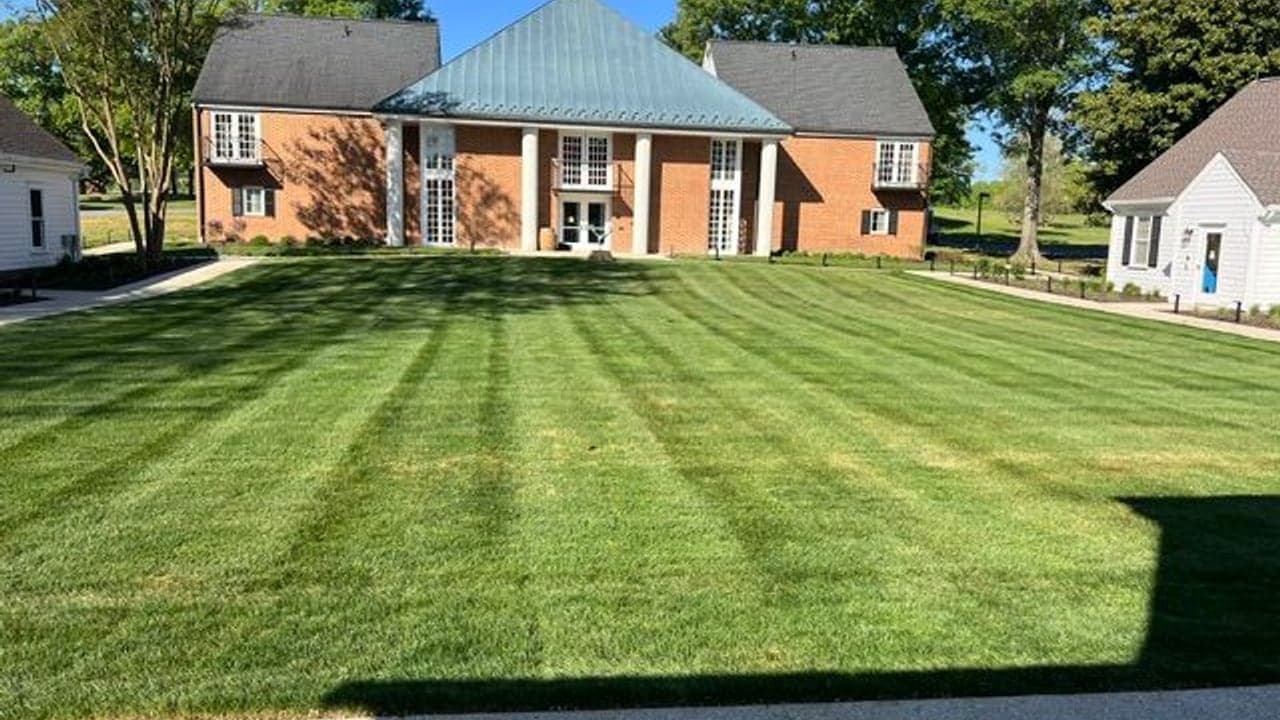
Bayside Tree and Landscape offers seasonal fertilization and weed control programs designed specifically for Eastern Shore soil and climate conditions. Call us at 443-988-5225 for a free property assessment.